
Resonant Earth: Padre Island National Seashore
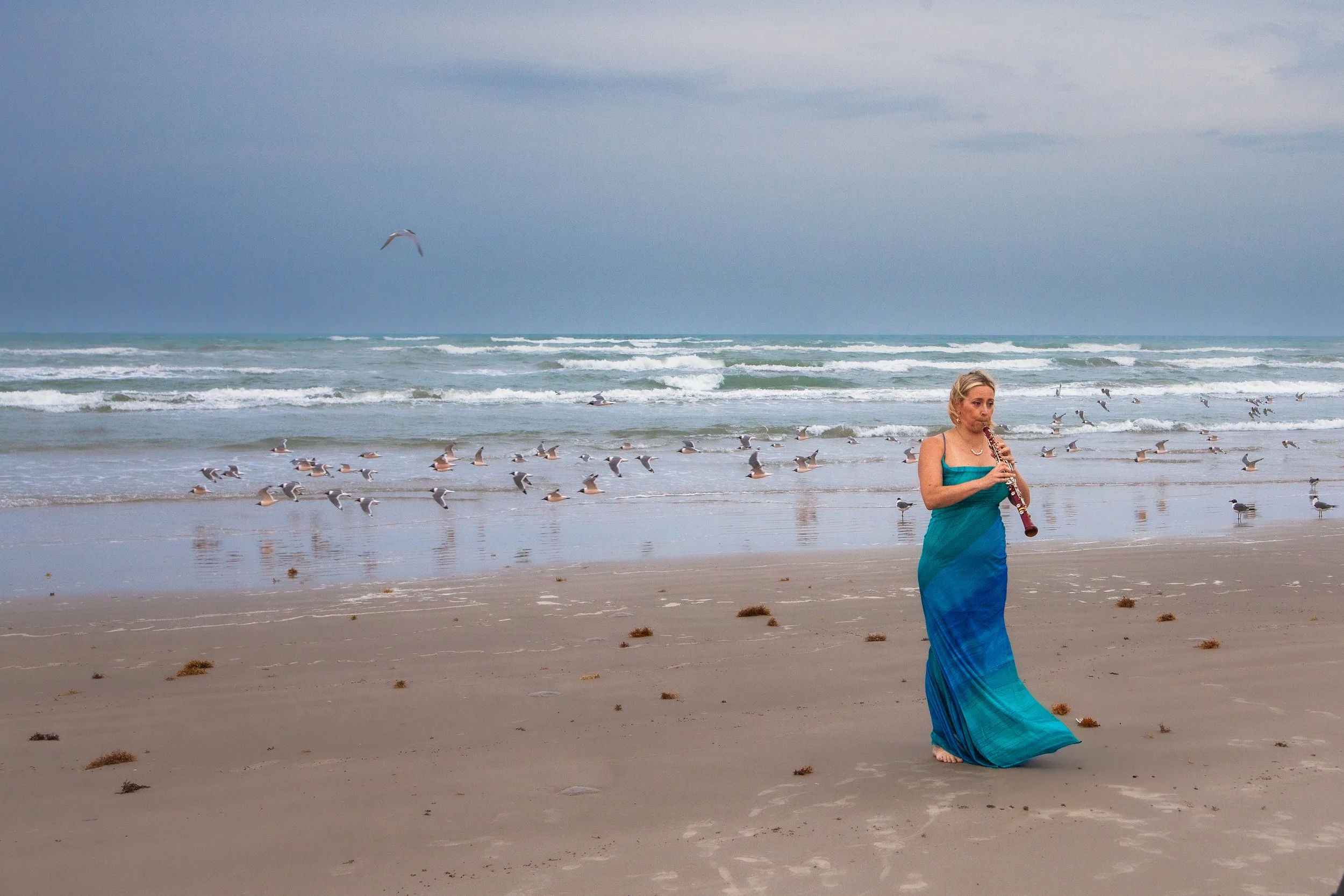
Photo Credit: Scott Pool
Intentions…
Intention is a word that is thrown around often.
Please set your intentions for your practice this morning. What are your intentions with my daughter? That is not how I intended for that to come across.
I would like to pose an important question to you. What are your intentions for this world that we live in?…
Resonant Earth: Sounding the Landscape through Her Voice is a project full of intentions. I intend to collaborate with 433 composers to create 433 new pieces about the National Park sites that are currently in existence. I intend to premiere each of these works for the world to hear and enjoy. I intend to support the park system, the animals, the lands, the history, and the voices who have walked those lands before us. I intend to visit each of the 433 National Park sites that I plan to represent musically. I intend to do all of this with my 15-year-old daughter.
This leads me to tell you about my most recent performance…
Costa for oboe d’amore and ocean by Nadia Botello, premiered on the coast of the Gulf of Mexico at Padre Island National Seashore.
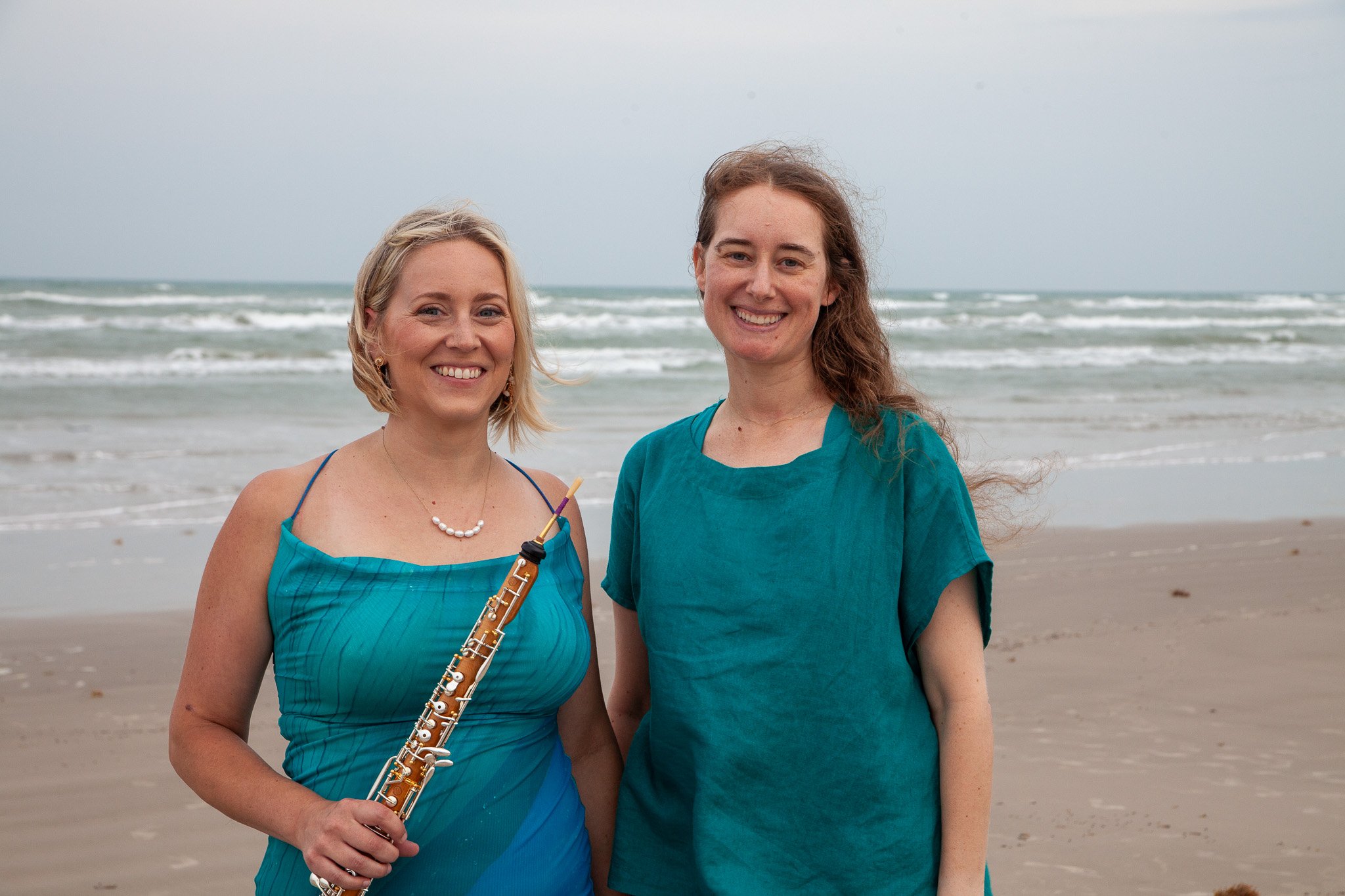
L to R: Susan Miranda & Nadia Botello Photo Credit: Scott Pool
Each project in this series has taken on its own character, which is always dictated by the composer who writes the piece. In this case, I happened upon Nadia Botello. From her website, “Nadia Botello (b. 1986) is an artist, composer, and engineer. A 9th-generation Tejana, she’s based in San Antonio.” Not only is Botello educated in music, sound, business, and technology, but she is also a Master Naturalist with a Texas Waters Specialist Certification. Nadia was the perfect fit for this project.
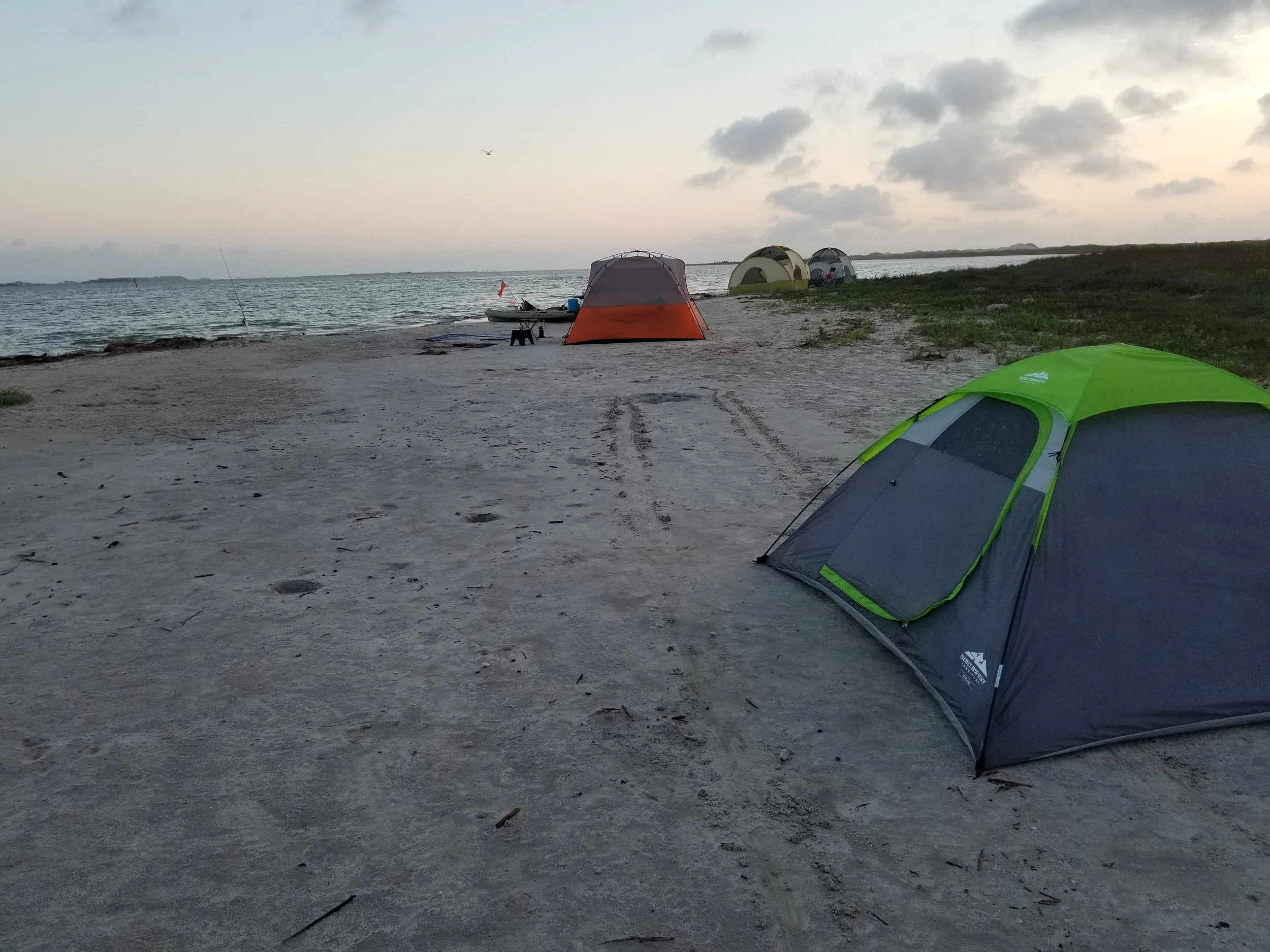
Photo Credit: Susan Miranda
Once deciding on a park and a composer comes the fun part, the planning! Ok, picking a park and a composer is fun, too. I had already planned a trip to Corpus Christi to record with some of my favorite colleagues and chamber musicians, Scott Pool, Madeleine Jansen, and Carrie Pierce, plus some new friends! I took this opportunity to visit Padre Island National Seashore, as it had been 2018 since my daughter and I had visited this park. She and I visited ALL of the Texas National Park sites during spring break of 2018! This included lots of driving, car sleeping, camping (see image), and a blizzard on the way home, which made her a couple of days late for school! We do have epic adventures! During our 2018 stop at Padre Island NS, we camped right along the coast, and we made corn and mac & cheese on a campfire for dinner. We met an older man who said he was a musician and had 20 harps in his van (harps = harmonicas), and we listened to him play. We met a lovely older couple who had a tent on the other side of our tent. On one of our trips to the toilet, we saw hundreds of tiny dots reflecting in the grass… upon closer inspection, each reflection belonged to a decent-sized spider. Do you want to guess how close I had to get to said spiders before I figured that out? All in all, a lovely trip. Little did I know that eight years later I would be performing on the beach!
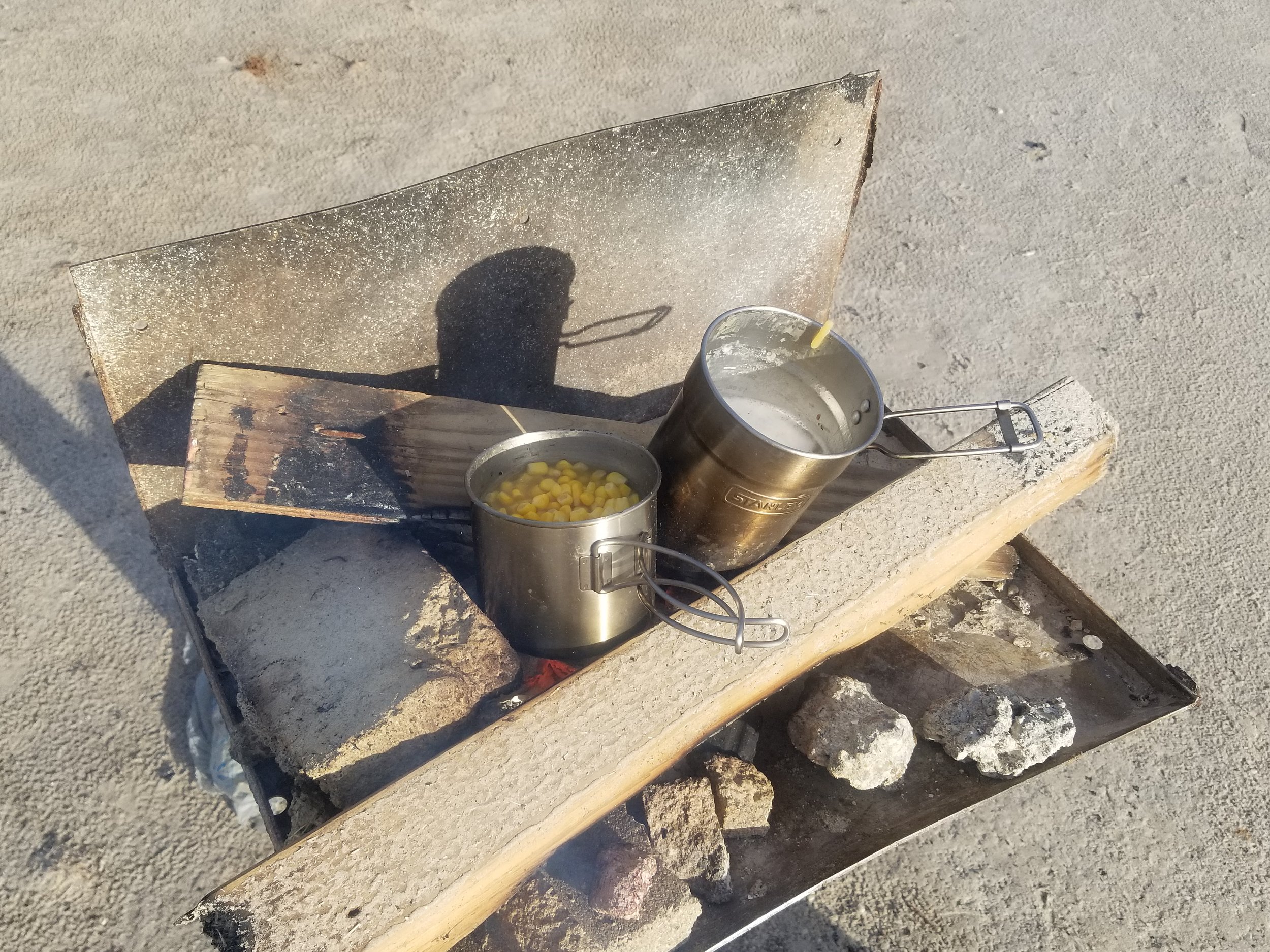
Dinner of champions: corn and mac & cheese!
Fast forwarding to January of 2026 (during an ice storm, nonetheless), we found ourselves back in Corpus Christi. I had the opportunity to visit the island again, meet with Lucas, a lovely park ranger, and choose a performant location for the performance. It was very cold, our Airbnb host even asked us to run the faucets. I’m not sure why the weather doesn't seem to not cooperate when we visit. Luckily, for the performance, it was beautiful (aside from some major wind), but the following day it rained all day long while I was recording! It was very helpful to get the lay of the land preceding the performance. Nadia was supposed to meet me there, but she couldn’t get out of San Antonio due to the crazy weather! Following this visit, I applied for a park permit and started making plans and arrangements. My new Mönnig oboe d’amore is sand colored (perfect!), so I HAD to get a dress that looks like the ocean. I think the dress I ended up with was absolutely perfect. I also had to find the perfect beachy earrings for the ensemble. I already had a (fake) pearl necklace that was the perfect addition to the dress. If you know me, I’m the girl who had an outfit change at intermission of her high school senior recital. Some say I should have been a flutist or vocalist… I’m not a normal oboist. I am well aware! Now, to find out the premise of the piece that Nadia was creating!
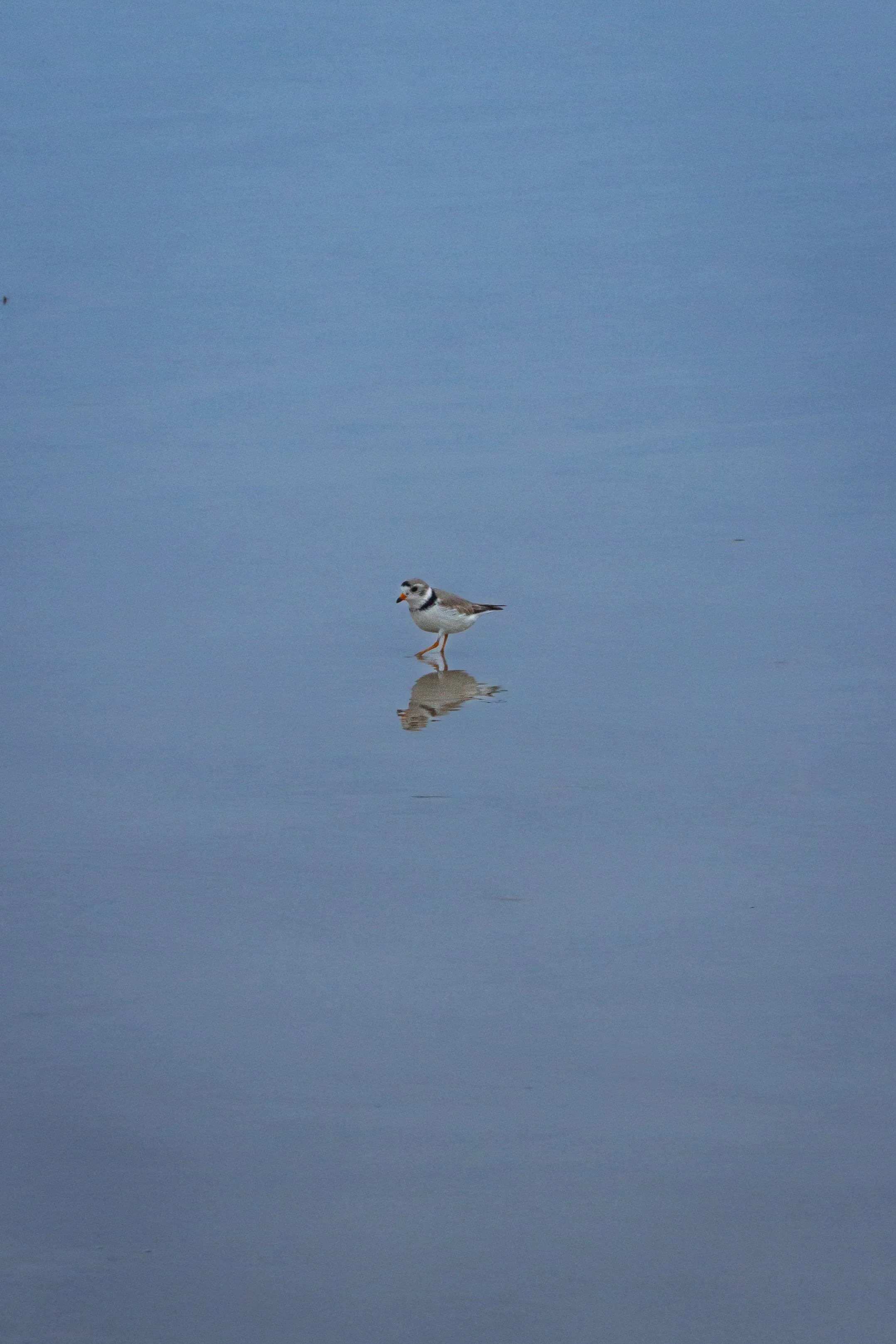
Photo Credit: Scott Pool
Initially, I was sure that Nadia would create something based solely on the water. She ran an idea by me about using the dune formations in some way to inspire the music, but she ultimately landed on a small migratory shorebird, a piping plover, as her inspiration. According to the Fish and Wildlife Service website, there are three populations of piping plover: on the shorelines of the Great Lakes, along the rivers and lakes in the Northern Great Plains, and along the Atlantic Coast. The piping plover in Padre Island National Seashore is considered threatened. Due to the rolling back of protections for National Park sites and the newly approved ultra-deepwater oil drilling project for BP in the Gulf of Mexico, it is safe to say that this species may be moving to the endangered species list sooner than I (and others) would like.
Though Nadia describes the piece in correlation to the performer’s ability to listen to the world around them, I found it to encompass an air of introspection. Throughout the performance, I found my mind wandering (some of that may be my ADHD!) to a place where the sounds of the birds flying behind me and around the island were lessened. A place where we are no longer able to create music from the natural world, because the natural world we once knew no longer exists. A place where our children don’t know many of the animals currently roaming the earth. Species that have disappeared during my lifetime are the Golden Toad, Pyrenean Ibex, the Chinese Paddlefish, the Pinta Giant Tortoise, the Splendid Poison Frog, and more. I am concerned. I am concerned for future animals that will go extinct. I am concerned for future generations who will not have the pleasure of visiting and experiencing current protected lands.
Going further down the endangered species rabbit hole… musical instruments such as oboes, English horn, and clarinets are made with hardwoods such as grenadilla and cocobolo woods, which are both considered endangered. Three of my four instruments are made with maple. Two of them are made with maple from Wisconsin trees! It is incredibly important to protect these species, both flora and fauna, that are threatened and endangered, so we will have them for many years to come.
Costa is a simple yet incredibly thought-out piece that represents an adorable little bird with orange legs and a black collar around its neck. Here are the Nadia’s words about her new work:
“At the edge of land, listening shifts. Wind bends tone before it travels. Waves swallow resonance and return it as motion. Distance becomes porous, and sound no longer belongs to a single source.
Costa was written for performance beside the living shoreline of Padre Island National Seashore. In this environment, the sea is both accompaniment and presence. The performer listens into that expanse, allowing breath and pacing to form in response to water, air, and shifting light.
The work traces its origins to the calls of the Piping Plover, a small native shorebird whose threatened survival is inseparable from the fragile ecologies of sand and tide. Rather than quoting those calls directly, the music reflects their pitch field and contour qualities. Narrow intervals and fleeting arcs dissolve into a slower musical language shaped by suspension and space, as if the gestures themselves have been weathered by salt and wind.
The oboe d’amore carries a voice that feels both near and distant, reedy yet veiled, human yet elemental. Its sound hovers in the air like a solitary presence within a vast field. Tones emerge tentatively, recede, and return altered, like patterns left briefly in sand before the tide erases them. Long notes become horizons. Silences widen the listening aperture.
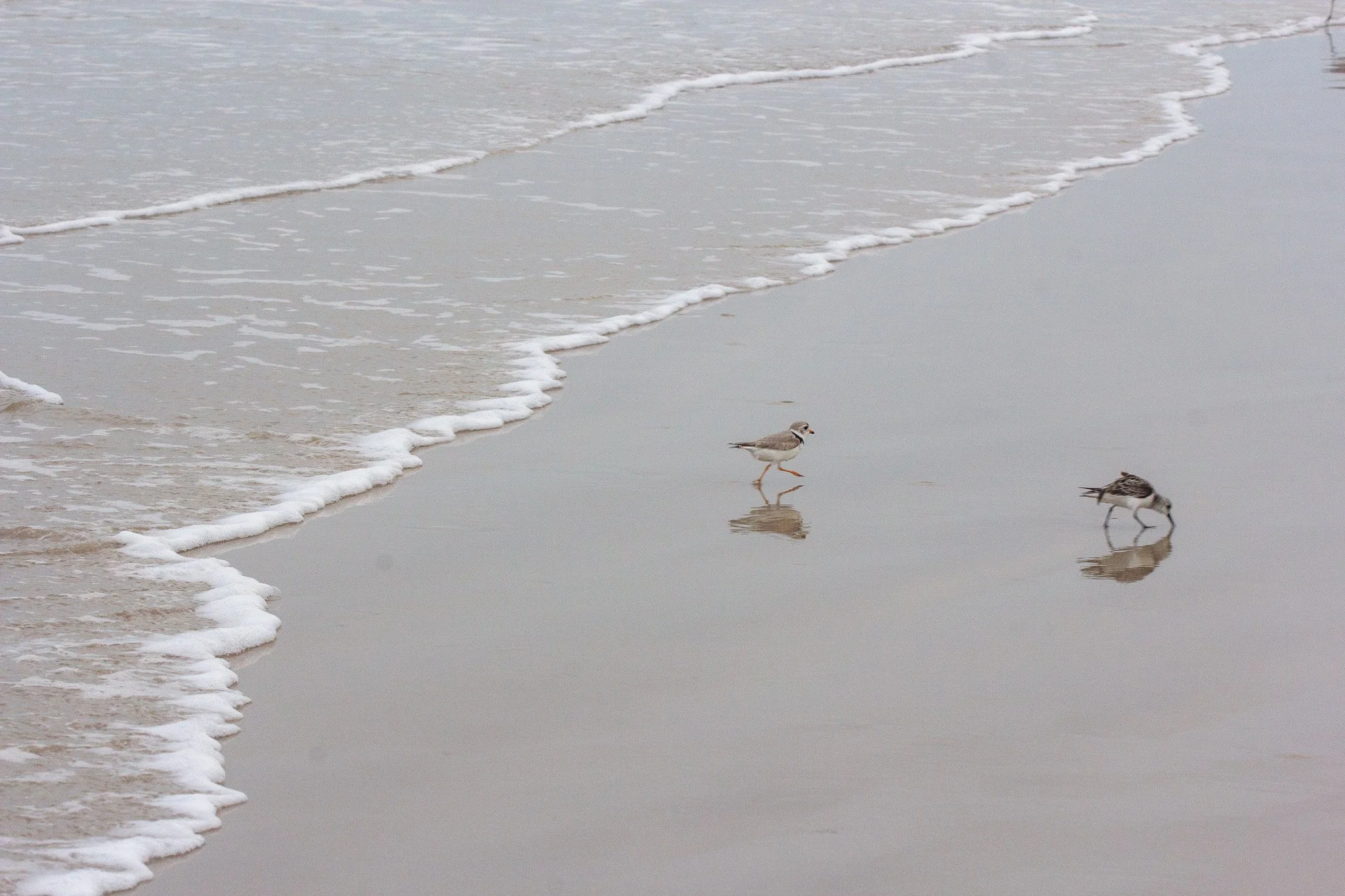
Photo Credit: Scott Pool
The music unfolds as a gradual passage through states of awareness rather than events. Fragile tones arise from silence and settle into gentle patterns that suggest coexistence. Moments of subtle disturbance interrupt this equilibrium before the sound returns quieter and more exposed. The piece does not move toward dramatic resolution. Instead, it settles into a sustained tone that fades into the surrounding environment, leaving the listener within the same acoustic world in which the piece began, yet now altered by a deepened perception of place.
Costa is an ecological meditation where human breath, shorebird calls, and the restless motion of water inhabit a shared landscape of sound, drawing us gently into its quiet expanse.”
Pictured is a singular piping plover. It is the only piping plover we saw while at Padre Island National Seashore.
This piece and project were made possible in part through generous funding by Mid-America Arts Alliance, the National Endowment for the Arts, and the state arts agencies of Arkansas, Kansas, Missouri, Nebraska, Oklahoma, and Texas. The Mid-America Arts Alliance Artistic Innovations Grant that I received requires a 1:1 match. This match has (almost) been fulfilled through the support of my parents, Michael and Jeanette Miranda, my lovely aunt, Linda McNichols, and Fox Products, my instrument maker, as well as each individual who has purchased my book (find the download for my book here!). Thank you to everyone involved, those who have given my posts a thumbs up, and to those who have donated to the project or purchased my book. This is a project that could not have happened without significant financial help. I hope that I can continue “Resonant Earth” for many years to come!
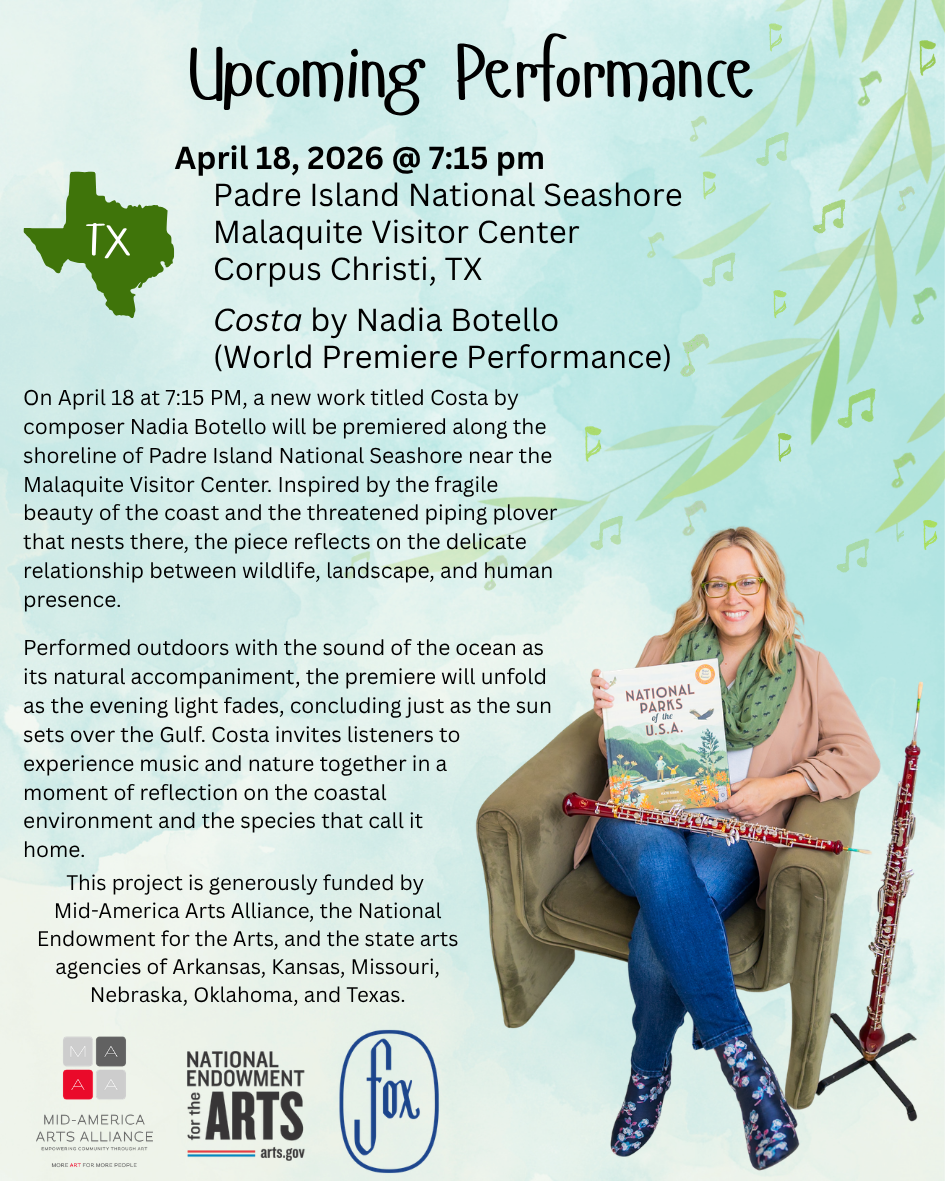
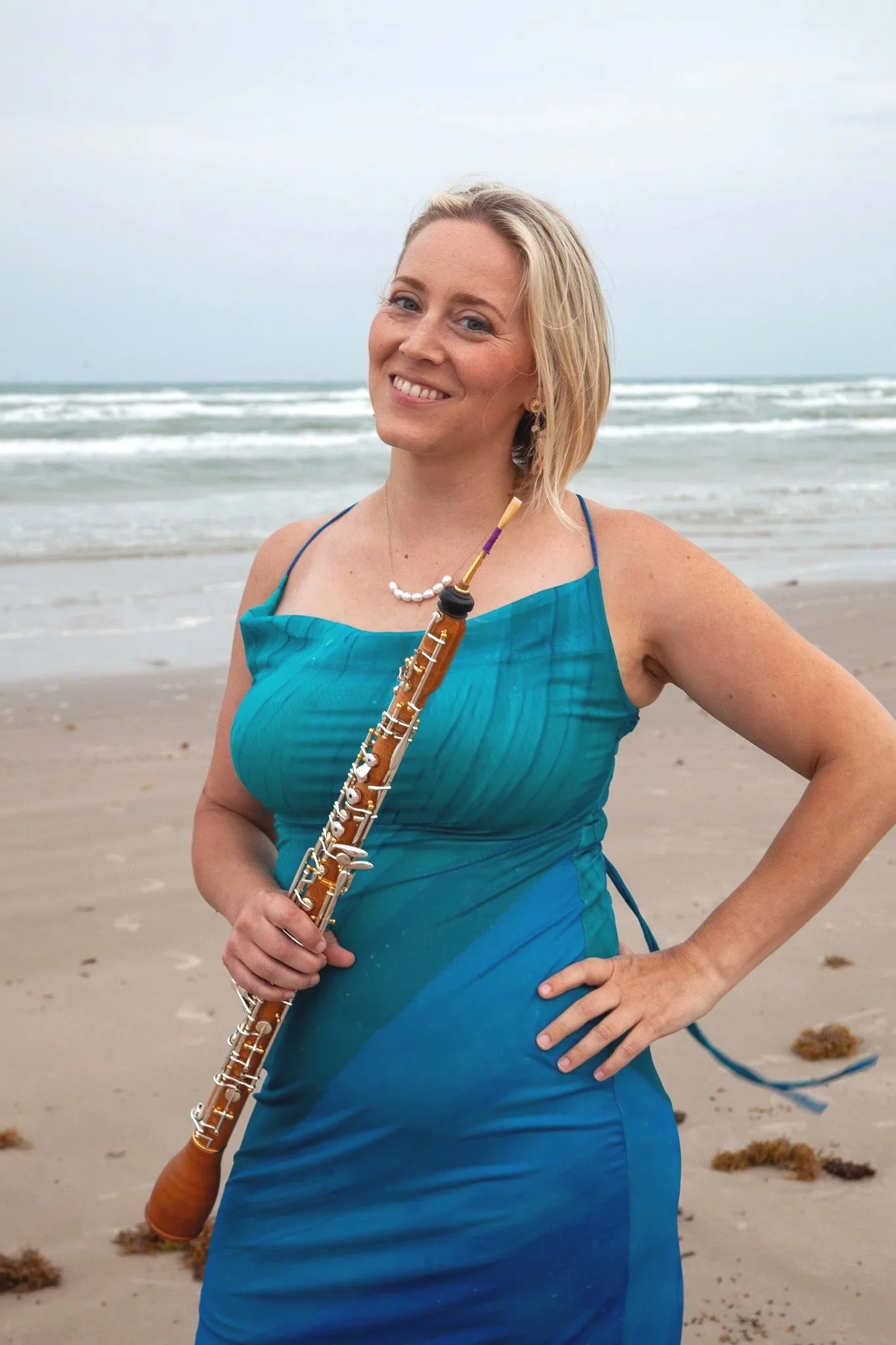
Photo Credit: Scott Pool